Training
··5 min readReturning to Exercise After Pregnancy: A Realistic Week by Week Guide

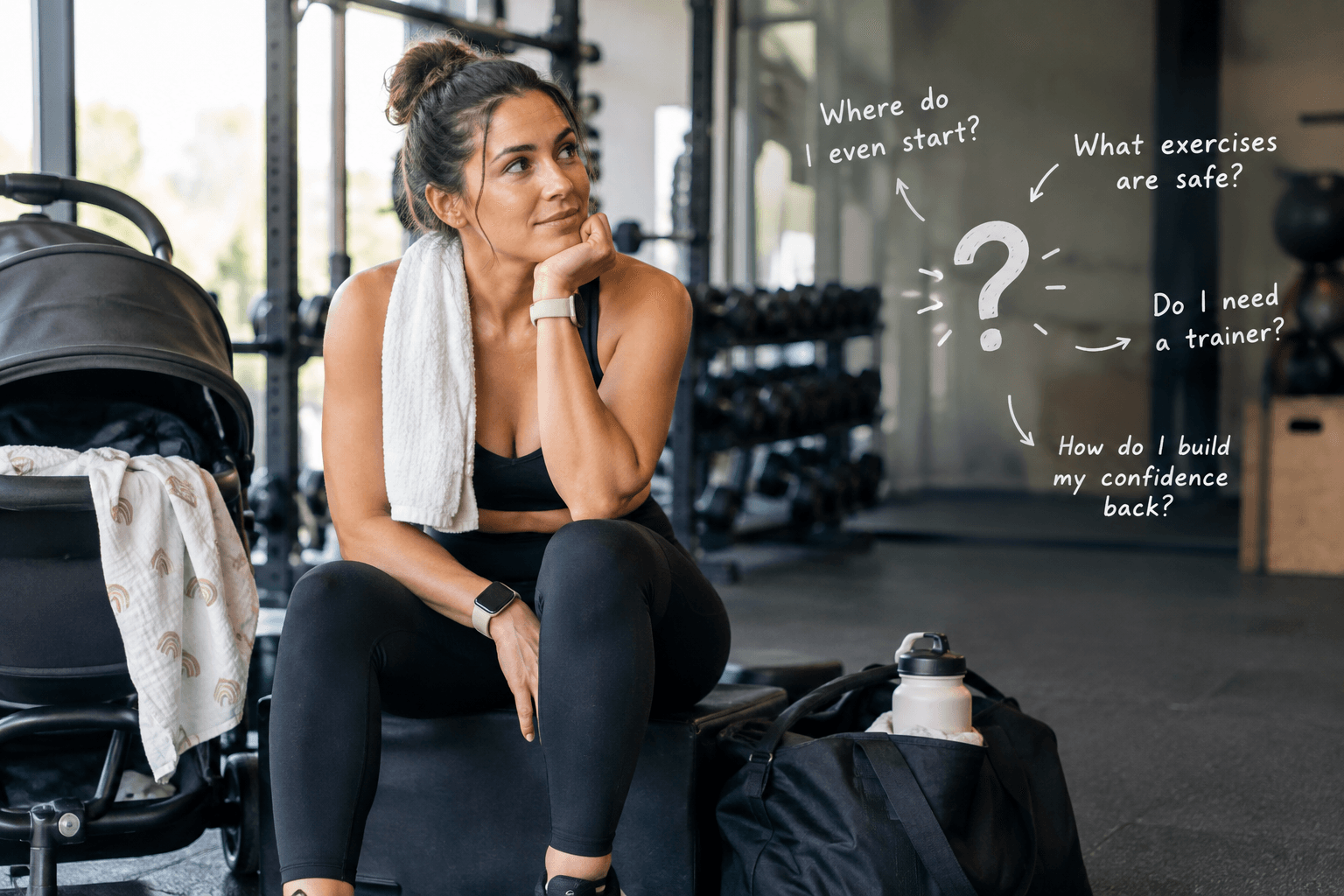
Most postpartum fitness advice online falls into one of two extremes: "you can do a full workout again in six weeks" or vague, overly cautious guidance that never actually says what to do. Neither is particularly useful when you're staring at a body that feels unfamiliar, trying to figure out what's actually safe this week.
Here's a more realistic, honest guide to returning to exercise after pregnancy, built around healing timelines rather than an arbitrary calendar date.
Why "six weeks and you're cleared" isn't the whole story
The standard six week postpartum checkup is a real and important milestone, but it's a general medical clearance, not a fitness green light tailored to your specific recovery. Diastasis recti (abdominal separation), pelvic floor function, and overall healing vary enormously from person to person and delivery to delivery. Two people cleared at the same six week visit can be in very different places physically.
This is why "how many weeks postpartum are you" is the wrong first question. "How does your body actually feel, and what has your provider said about your specific recovery" is the right one.
Weeks 0 to 2: Rest and gentle movement
This period is about healing, not training. Short, easy walks and basic breathing work (diaphragmatic breathing, gentle pelvic floor engagement) are typically appropriate, but this varies based on delivery type and any complications. This is not the time for structured workouts of any kind, and that's expected, not a setback.
Weeks 2 to 6: Foundational reconnection
If cleared by your provider for gentle activity, this window is often about reconnecting with your core and pelvic floor before adding load. Think gentle pelvic tilts, continued walking with gradually increasing duration, and breathing pattern work. The goal isn't fitness progress yet. It's rebuilding the foundation everything else gets built on.
Weeks 6 to 12: Gradual reintroduction (with clearance)
Once you have clearance from your provider, this is typically when structured, low impact strength work can begin, assuming no signs of diastasis recti complications or pelvic floor dysfunction that need addressing first. Bodyweight squats, modified planks, and light resistance work are common starting points. Impact activities (running, jumping) are usually still too early here for most people, even with general clearance, since pelvic floor strength often needs more time regardless of the six week mark.
Months 3 to 6: Building back structured training
This is often when a more traditional training structure starts making sense again, gradually increasing load and reintroducing movements that were paused. Progress here is rarely linear. Sleep deprivation, feeding schedules, and simple lack of time all affect capacity in ways that have nothing to do with physical readiness. A plan that only measures success against a pre pregnancy benchmark tends to feel discouraging fast.
The signs that mean slow down, regardless of timeline
Certain signals matter more than any calendar based timeline, at any stage:
- Leaking urine during exercise (a common sign pelvic floor strength isn't ready for that intensity yet)
- A visible doming or bulging along the midline of the abdomen
- Pain, pressure, or a dragging sensation in the pelvic area
- Bleeding that increases with activity
None of these are signs to panic, but they are signs to scale back and, if persistent, check in with your provider or a pelvic floor specialist before progressing further.
What actually helps beyond the timeline
Programming built around where you actually are, not a generic week count. Two people at 10 weeks postpartum can need very different starting points depending on delivery type, complications, and how their recovery is actually progressing.
Realistic expectations about non linear progress. A good week followed by a rough one isn't regression, it's normal, especially with interrupted sleep and a completely new physical and logistical reality.
Someone who understands this specific context. General fitness programming that doesn't account for pelvic floor healing, diastasis recti, or the realities of early parenthood often either pushes too hard too soon or stays too conservative for too long.
This is exactly the gap Mina, MVPeak's postpartum focused coach, is built to close. Programming adjusts based on your actual recovery stage and clearance status, not a generic week count, with progressions designed around pelvic floor and core healing rather than assuming everyone is ready for the same thing at the same time.
FAQ
How soon after giving birth can you start exercising again? Gentle movement like short walks is often appropriate within the first couple of weeks if you feel up to it, but structured exercise generally waits for provider clearance, commonly around six weeks, and even then should start gradually.
Is it normal for exercise to feel harder postpartum than before pregnancy? Yes. Changes in core and pelvic floor function, sleep deprivation, and simple deconditioning during pregnancy are all normal contributors. This isn't a sign something is wrong. It's an expected part of rebuilding capacity.
What is diastasis recti and does it affect what exercises are safe? Diastasis recti is a separation of the abdominal muscles that's common during and after pregnancy. Depending on severity, certain core exercises may need to be modified or avoided until it improves, which is worth discussing with a provider or pelvic floor specialist.
When is it safe to start running again after having a baby? There's no single safe date that applies to everyone. Most guidance suggests waiting until pelvic floor strength and control are adequately restored, often several months postpartum, and ideally confirmed by a pelvic floor specialist or provider rather than a fixed calendar date.
Ready for programming built around your actual recovery, not a generic timeline? Mina adjusts your plan to where you really are, postpartum stage, clearance status, and how you're actually feeling. Try it free for 7 days. Find My Coach →
Related read: Why You Keep Quitting Your Workout Routine (It's Not a Motivation Problem), on building consistency once you're cleared to train again.
Keep reading
View all posts
Training
·5 min readTraveling for Work? Here's How to Keep Training Without a Gym or a Plan Falling Apart!
Work travel doesn't have to wreck your training. Here's how to keep progressing from a hotel room, with no gym and no equipment!

Training
·5 min readTraining Around a Knee Injury: What's Actually Safe to Do (And What Isn't)
A knee injury doesn't mean training has to stop. Here's what's generally safe to keep doing, what to avoid, and why it varies.

Training
·5 min readHybrid Training Explained: How to Train for Strength and Endurance Without Sabotaging Either
You can build strength and endurance at the same time, if you manage the tradeoffs. Here's how hybrid training actually works.
mvpeak
Put the reading into practice
Every coach on this blog trains members in the app, with plans, sessions and meals built around your week.
No credit card required · Cancel any time