

"I don't have equipment" is one of the most common reasons people put off training, and it's also one of the least necessary. Muscle grows in response to resistance, effort, and consistency. A barbell is one way to create resistance. It is not the only way, and for a huge number of people it isn't even the most sustainable one.
Here's what actually works when your gym is a living room, a garage, or a hotel floor, and why the plan matters more than the equipment.
Why bodyweight training works better than people expect
The muscle building mechanism doesn't care whether resistance comes from a loaded barbell or your own bodyweight. What it cares about is whether a muscle is worked close to failure and challenged progressively over time. Bodyweight training checks both boxes when it's programmed well.
Where bodyweight training tends to fall short isn't the science, it's the programming. Most people doing pushups and squats in their living room are running the same fixed routine week after week with no plan to make it harder. Progress stalls, they get bored, and they conclude bodyweight training "doesn't work." The training method wasn't the problem. The lack of progression was.
The core moves that cover every major muscle group
You don't need dozens of exercises. A small set, done well and progressed properly, covers almost everything:
Lower body: Squats, split squats, and single leg glute bridges cover quads, glutes, and hamstrings without a single plate.
Push: Pushups (and their many variations, from incline to decline to single arm progressions) train chest, shoulders, and triceps as effectively as a bench press for most training levels.
Pull: This is the hardest one to replicate without equipment, since there's no bodyweight substitute for a row or a pull up without something to pull against. A sturdy table edge, a doorframe pull up bar, or a resistance band closes this gap.
Core: Planks, dead bugs, and hollow holds build the kind of core stability that actually transfers to everything else you do.
How to make bodyweight training harder as you get stronger
This is the piece most people miss. Ways to increase difficulty without adding weight:
Slow the tempo. A four count lowering phase on a pushup or squat adds significant time under tension, which is one of the primary drivers of muscle growth.
Reduce leverage. Elevating your feet during a pushup, or moving from a two leg squat to a single leg version, dramatically increases the demand on the same muscles.
Add pauses. A two second pause at the bottom of a squat removes the elastic bounce that lets you cheat the hardest part of the movement.
Increase density. Doing the same number of reps in less time, or more reps in the same time, is progressive overload even without added resistance.
A plan that rotates through these variables over weeks, rather than repeating the same routine indefinitely, is the actual difference between bodyweight training that builds muscle and bodyweight training that plateaus in month one.
What changes when a plan is built around what you actually have
Most generic "no equipment workout" plans online assume you have nothing at all, even if you actually own a couple of dumbbells, a pull up bar, or resistance bands sitting in a closet. That's a missed opportunity, because even minimal equipment opens up a lot more variety and faster progress.
This is where an equipment aware approach makes a real difference. MVPeak's equipment scan lets you point your camera at whatever space you're training in, whether that's an empty living room, a garage with a few dumbbells, or a hotel room, and your plan adjusts to use exactly what's there. Add a resistance band next month and the plan updates. Travel for a week with nothing but floor space and it adapts again. The training doesn't reset to a generic template every time your setup changes.
A sample structure to start from
A simple three day full body split works well for most people starting out with bodyweight training:
Day one: Squats, pushups, plank, single leg glute bridge Day two: Split squats, pike pushups (shoulder focused), dead bug, doorframe rows Day three: Single leg squats, decline pushups, hollow hold, resistance band pulls
Each session should leave your last set or two feeling genuinely hard, close to the point where good form would break down on another rep. If it doesn't feel that way, that's the signal to add one of the difficulty variables above, not to add more exercises.
FAQ
Can you actually build muscle with just bodyweight exercises? Yes. Muscle growth responds to mechanical tension and progressive difficulty, both of which bodyweight training can provide when the program includes ways to make exercises harder over time.
How long before you see results from a no equipment workout plan? Most people notice strength improvements within two to three weeks and visible changes within six to eight weeks, similar to timelines seen with traditional weight training, assuming consistent effort and enough progression built into the plan.
What's the biggest mistake people make with home workouts? Doing the same routine indefinitely without a way to increase difficulty. Without progression, muscles adapt to the current demand and stop changing.
Do I need any equipment at all to get a good workout? No, though even small additions like a resistance band or a pair of light dumbbells meaningfully expand what's possible, particularly for pulling movements that are hard to load with bodyweight alone.
Want a plan built around exactly what you have, wherever you're training? Scan your space and Madi will build your program around it, then adjust it automatically as your equipment or location changes. Try it free for 7 days. Find My Coach →
Related read: AI Personal Trainer vs Human Trainer: What You Actually Get With Each in 2026, for a full breakdown of how personalized coaching actually adapts to your situation.
Keep reading
View all posts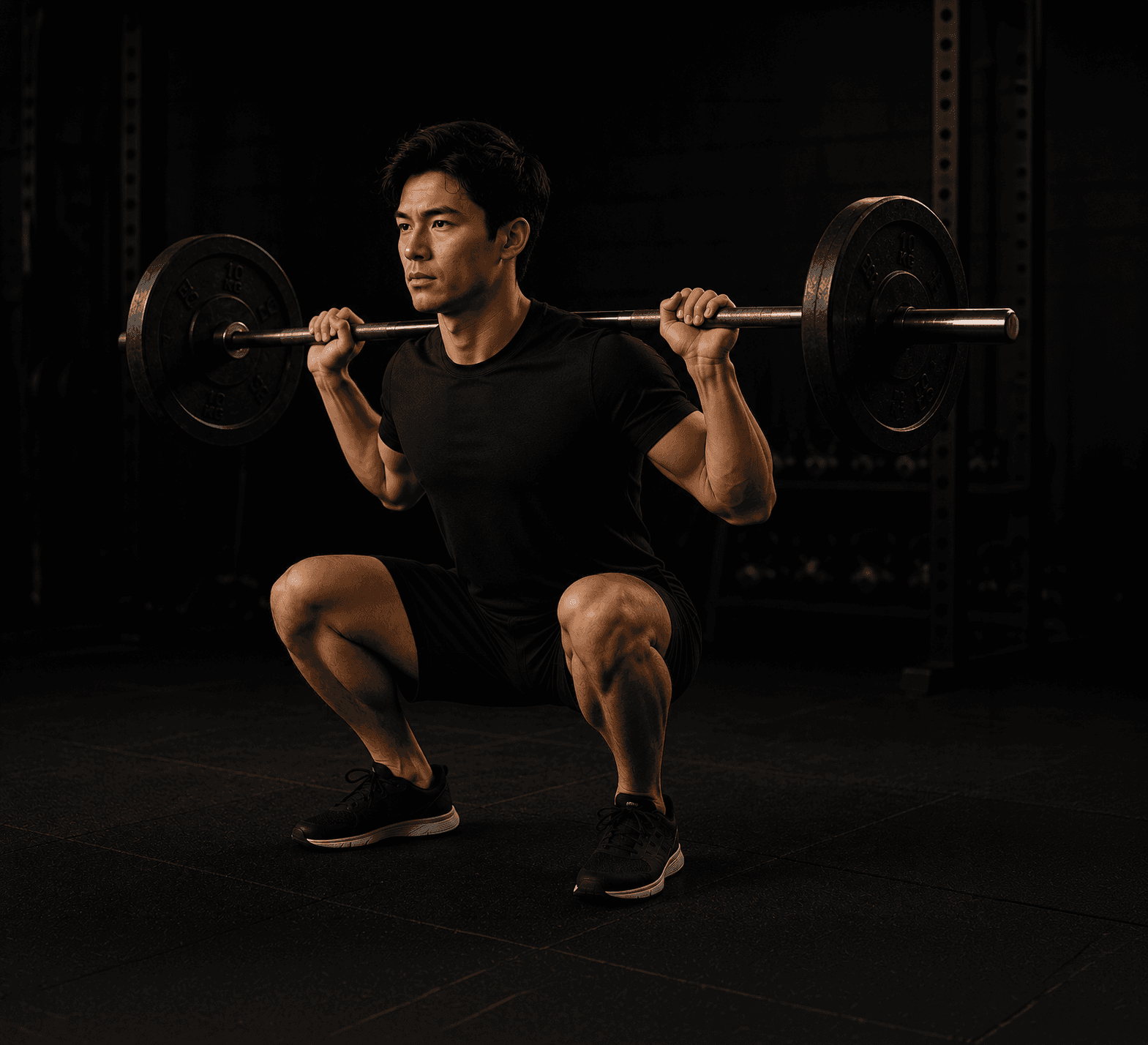
Training
·5 min readSquat Form Checklist: 7 Mistakes That Are Quietly Wrecking Your Knees
Knee pain from squatting is usually a form issue, not a reason to stop. Here are the 7 mistakes to check first, and how to fix them.

Training
·5 min readAI Personal Trainer vs. Human Trainer: What You Actually Get With Each in 2026
AI personal trainers now build real time, personalized plans for less than a human coach costs, see what each actually gives you.
mvpeak
Put the reading into practice
Every coach on this blog trains members in the app, with plans, sessions and meals built around your week.
No credit card required · Cancel any time